
Marion Address History Sources
Previous residents of a Marion address emerge from a stack of records, not one master roll. Current parcel data supplies the General Parcel Number, or GPN, situs address, legal description, and recorder references. Deeds identify ownership transfers. Directories and census sheets then add occupants, spouses, work clues, and household members. Permits date physical changes, while newspapers, obituaries, cemetery material, and probate can explain why a household vanished from the next listing.
| Source | Years It Covers | Where Held | What It Shows |
|---|---|---|---|
| Linn County deeds | 1850s onward at the office; web cutoff unverified | Recorder, AVA, Iowa Land Records | Owners, instruments, legal descriptions |
| Marion City Directory | 1915-2009 | Digital Community History Archive | Named residents, spouses, work and addresses |
| Telephone and rural directories | 1927-1937 and 1900-1947 | Digital Community History Archive | Telephone and rural address clues |
| Federal and Iowa census | Federal through 1950; Iowa through 1925 | Library genealogy databases | Households and relationships |
| Marion permits | 2010-current online | Tyler portal; Building Services for older files | Work address, applicant and inspections |
For a recent transfer, start with the assessor and deed chain. For a mid-century question, search several directory years around the target date. Earlier work may require the State Historical Society of Iowa, which lists Linn County land, town-lot, probate, court, cemetery, church, school, and atlas record groups. Census and directory evidence should be paired because neither proves continuous residence by itself.
Start With Marion's Current Parcel
Names change more often than land descriptions. Search the Linn County residential property form by address, parcel, description, section-township-range, or lot area. The form did not expose a verified owner-name field during research. A parcel result or linked GIS card can distinguish the physical situs from a tax mailing address and show a GPN, legal description, property class, values, tax district, and recorder link.
Copy the GPN and legal description before opening another system. A mailing address may belong to a trust, estate, business, representative, or post-office box. It does not establish who slept in the house. The current owner field is a starting point for previous residents research, while the legal description is the durable bridge to old deeds and plats.
Marion Deeds Beyond the Web
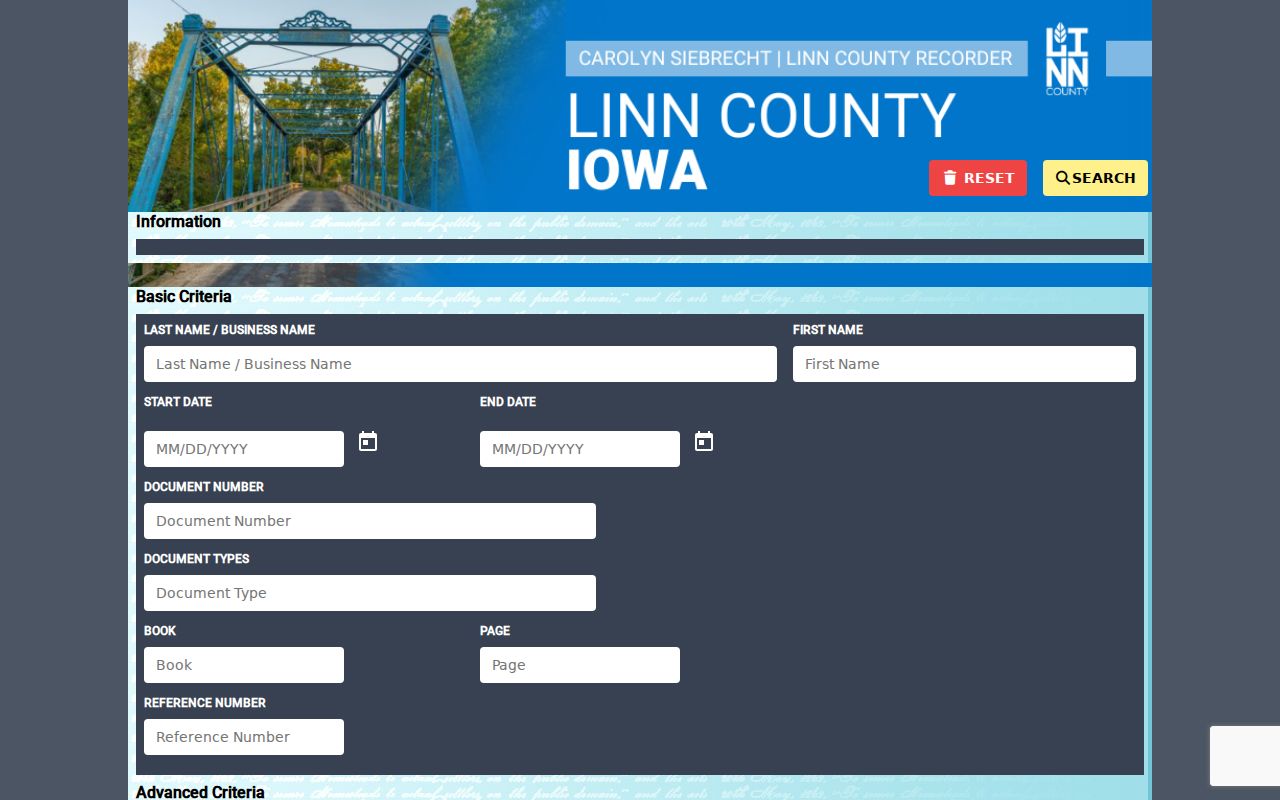
The Linn County Recorder's real-estate page says transactions reach the 1850s, yet no verified online image cutoff was found. The AVA screen loaded as a web shell during research, so common Fidlar controls must not be assumed. Use the office, phone, mail, or drop-box route when the web search stops. Supply the GPN, legal description, instrument or book and page, party name, date range, document type, and address.
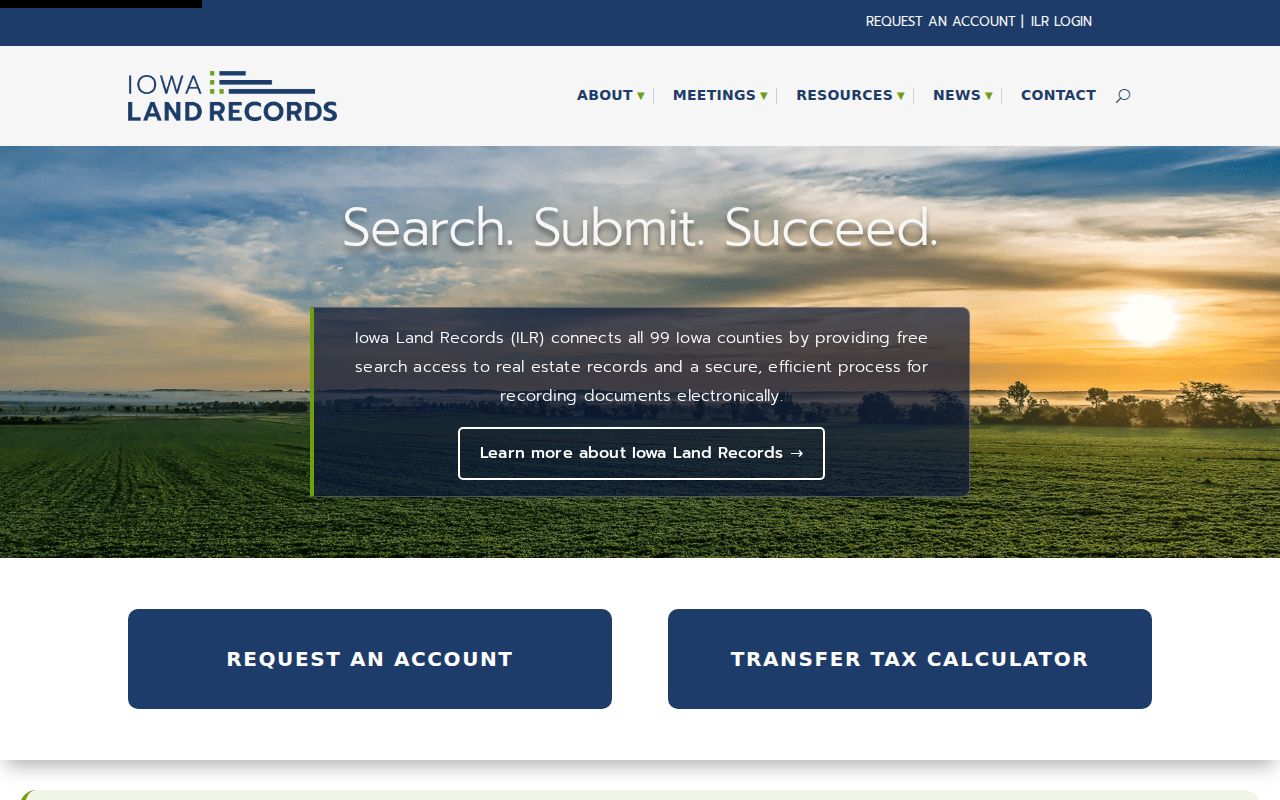
The county lists ordinary copies at $1 per page and certification at $5. Ask whether staff are searching a scanned instrument or an older deed book. Iowa Land Records adds a free statewide search across all counties, but it does not erase Linn's local archive boundary.
The Iowa Land Records screen below is one official bridge when an address trail crosses county or portal boundaries.
Carry the instrument details back to Linn County for the held image or certified copy.
Note: The office's 1850s holdings do not prove that every early image is available through AVA.
Marion's 2024 Recorder Change
Linn County moved to a new Fidlar land-recording and search system on September 3, 2024. Recording and searching paused at noon on August 30 during the transition. The county said records would be available and viewable after the launch. This timely change explains why old bookmarks or instructions may not match the current AVA route, but it does not establish when the county first digitized its deeds.
The official Linn County AVA deed index is pictured below. If it does not reveal the needed image, save the identifiers instead of guessing at missing fields.
A precise office request built from the parcel and instrument data is the dependable fallback.
Trace Linn County's Deed Chain
A chain of title is the linked series of transfers for the same land. Work backward from the current parcel rather than searching a remembered surname first. Deeds, mortgages, releases, liens, and assignments can share party names, so confirm the document type and legal description at every step.
- Pull the current deed owner, GPN, and legal description from the assessor or GIS parcel card.
- Use the recorder reference or AVA to locate that owner's purchase deed.
- Read the seller, then search that seller as a grantee to find the seller's earlier purchase.
- Repeat while checking the same lot, block, plat, or other legal description.
- When online images stop, request the book, page, or instrument through the Recorder or state archive.
- Grantor and grantee
- The grantor gives or transfers an interest; the grantee receives it.
- Chain of title
- The sequence of recorded transfers tied to the same land.
- Legal description
- The lot, block, plat, or survey wording that identifies land even when a street address changes.
A mortgage or lien is not automatically a sale. Stop and resolve any gap where the land description changes, a party acts as executor, or the instrument is only a release. Recorder staff may explain the general purpose of a document, but the county says they cannot give legal advice.
Marion Permits Date House Changes
The Marion permit portal covers 2010 to the present. Search the service address to find work, applicant or contractor context, inspection events, and final status. Building Services is the request route for older files. A permit can date an addition or repair and explain a jump in assessed improvements, but its applicant is not proof of the household living there.
Match the service address to the parcel and compare the permit date with the next directory, deed, or news item. Planning and zoning files may also contain plats, rezoning, variance, or annexation applications. Since the city zoning map is not searchable by address, parcel-specific questions belong with Planning and Development.
Protect a Marion Deed Name
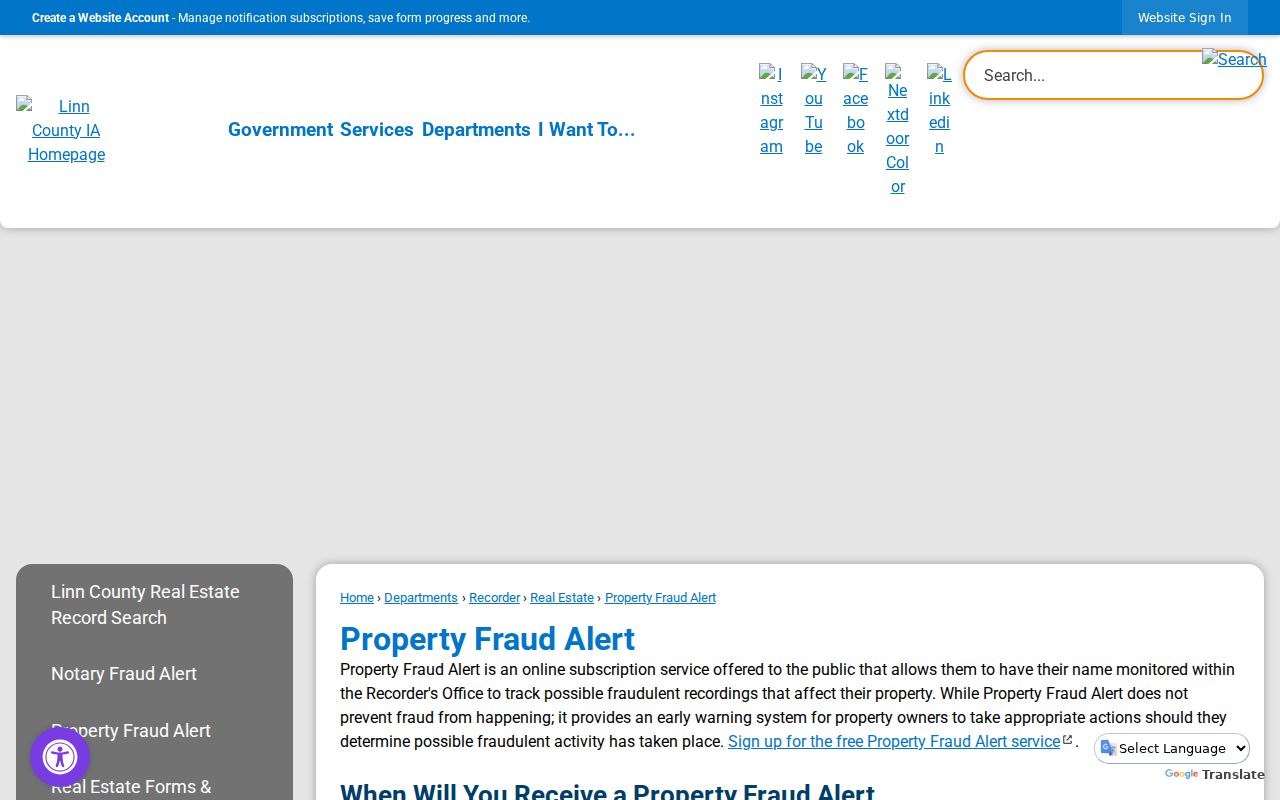
Past-owner research can reveal an unexpected new filing. Linn County's free Property Fraud Alert watches a subscribed name and sends notice of a recent purchase, sale, refinance, loan, or lien. It is an early warning, not a tool that blocks a recording.
The county's enrollment page appears below. A name alert can include an unrelated same-name filing, so inspect the instrument and legal description before drawing a conclusion.
If the filing matches the parcel, contact the Recorder with the document details. Staff can describe its general purpose, though they cannot decide whether it is valid.
Marion's Past Household Trail
Owners are only part of a house history. The Marion City Directory run from 1915 through 2009 includes alphabetical and street or reverse material, while the telephone and rural runs reach different years. Search the address in the target year, then check editions just before and after it. Record the spelling, spouse, work notation, phone number, and homeowner mark exactly as printed. The Marion city directory collections are covered in detail on their own page.
Pair directory snapshots with the 1950 or an earlier federal census, and with Iowa's final 1925 state census when the date fits. Federal census releases follow the 72-year rule. Marion's changing wards, township references, and city boundary may require an enumeration district, the small area assigned to a census taker, rather than a modern street search.
- Search two or more directory editions around the move.
- Note every address variant and the first and last appearance.
- Find the matching census district and read nearby households.
- Check newspapers, the Linn County obituary index, Oak Shade records, and probate for an endpoint.
Oak Shade burial records and cemetery deeds can connect a family or estate, but a grave is not proof of residence. Probate can name an executor or heirs. Obituaries may give a last address or relatives. Use each as a lead and retain its date and custodian.
Lawful use. Previous residents research is suited to house history, genealogy, estates, and personal curiosity. Never use a finding to stalk, harass, or expose a living person.
Bridge Marion Address Gaps
No official Marion street-renumbering year was verified, and the Library of Congress search found Cedar Rapids Sanborn material rather than a confirmed Marion set. Do not invent either fact. When an old house number fails in the current GIS, compare city maps, minutes, plats, legal descriptions, directory street guides, and newspaper address references. The Marion Heritage Center and Marion Public Library can help identify local maps or photographs, while the State Historical Society supplies the county-record fallback.
Source labels matter. “Parcel owner,” “directory listing,” “permit applicant,” and “census household” are narrower and more accurate than “resident.” A dated chain made from those labels can show who lived here before without turning one uncertain match into a claim.
Marion was surveyed in 1839, and its early land, town-lot, and council records use a setting quite different from today's parcel map. The railroad arrived in 1864 and Marion became a division point in 1887, so early newspapers may describe a person or property through railroad and business terms. The archive's Marvin Oxley Collection, dated 1866 through 1938, adds photographs and local family or business context. It is a historical collection, not a present-day resident roll.
Note: No verified courthouse disaster explains Linn County gaps; identify the missing series, year, and custodian instead.