
Begin a Marion Residents Search
Choose the first source by the fact already known. A street address belongs in the Linn County Assessor search. A current registration check needs a full name, ZIP, house number, and birth date in Iowa's voter tool. A historical name or address belongs in Marion's Digital Community History Archive. One result is a lead, not proof. Ownership does not establish occupancy, a voter match does not describe a whole household, and an old directory reports only what its publisher gathered in that edition.
The Marion residents directory works best as a documented sequence. Save the date, spelling, parcel number, instrument number, and record keeper at each step. If two people share a name, compare middle initials, dates, roles, and places before joining their records. When a portal fails, ask for a narrow existing record instead of asking an office to create a custom list.
- Search the assessor by physical address and save the parcel's GPN, the county's geographic parcel number.
- Open the GIS parcel details and separate the situs, or physical site, from the owner's mailing address.
- Follow the recorder reference into AVA or Iowa Land Records, then note each grantor and grantee.
- Use the state voter lookup or court index only when their search fields fit the question.
- For older people, pair a dated directory entry with newspapers, census schedules, deeds, or probate material.
Marion Directory Record Keepers
Marion is in Linn County, and Cedar Rapids is the county seat. That split decides where records live. Marion City Hall keeps municipal requests, permits, council material, and planning files. County offices in Cedar Rapids keep deeds, parcel assessments, voter-list requests, and district-court files. State portals handle statewide voter registration, court dockets, business entities, protected-address services, and many vital records. The full parcel-by-parcel method belongs in the Marion street directory.
Office access remains important. Recorder records extend to transactions from the 1850s, but the official source does not state where the complete online AVA coverage begins. The Assessor and GIS offices offer public search and staff help. Election Services accepts the county list-request form, while the Secretary of State provides the individual registration check.
Search Marion Parcels First
The Linn County residential property search is the strongest public starting point for a Marion address. Its form does not expose an owner-name box. Search instead by parcel number, physical address, legal description, section-township-range, or lot area. A result can connect the address to owner and mailing clues, assessed values, class, exemptions, tax district, and a legal description. Keep the assessment year with any value.
| Search field | How Marion research uses it |
|---|---|
| Parcel number | Opens one known GPN directly |
| Physical address | Finds a street number and street name |
| Legal description | Bridges an address change or deed search |
| Section, township, range | Narrows land outside a simple lot address |
| Lot area | Supports a constrained parcel search |
The manifest's Iowa registration source shows a different kind of official lookup.
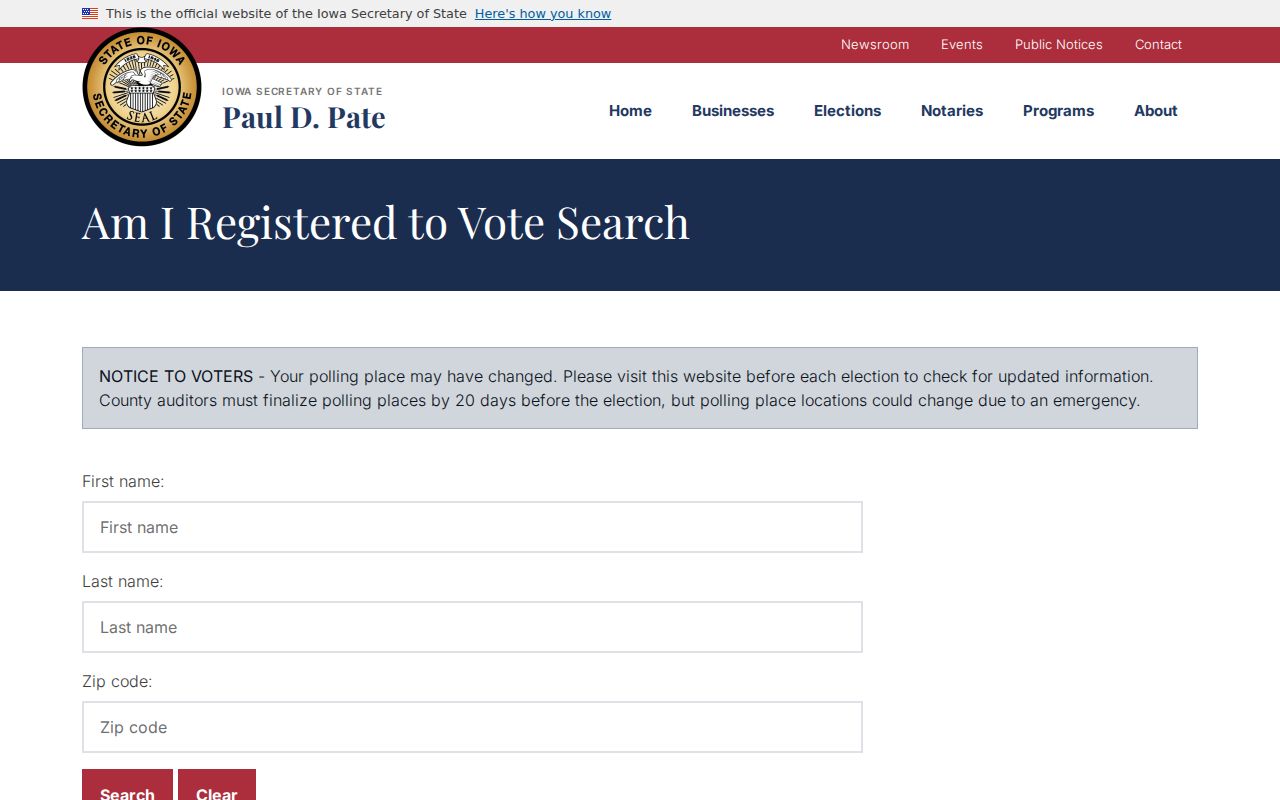
Its required personal fields make it a confirmation tool, not a way to browse a Marion street.
Linn GIS Deepens Marion Records
The Linn GIS parcel layer adds details that the assessor form cannot search by name. Its fields include GPN, situs address and ZIP, deed owner, contract owner, mailing address, legal description, assessed values, tax district, exemptions, and recorder book, page, or instrument references. Direct assessor, property-report, and recorder links can turn one map selection into a clean records chain. Adjacent polygons also show the shape of the block, but the map does not identify every person living inside a parcel.
- Parcel
- A mapped unit of land identified by a county number.
- Situs address
- The physical address of the parcel, distinct from an owner's mailing address.
- Index
- A finding tool that points to a document; it is not always the document image.
- Criss-cross directory
- A directory arranged by street or phone so an address can lead to a listed person.
Open GIS data are free. The county says its public layers are extracted and uploaded on Mondays. For a question the viewer cannot resolve, contact the GIS Division or Assessor with the GPN and exact field at issue.
Current Marion Directory Sources
Current Marion resident rolls cover different groups. None is a master household register. The property roll centers on ownership, the voter systems center on registration, recorded instruments identify parties to filed land documents, and municipal files identify applicants or participants in a city matter. State business records can confirm an entity or agent, but a business address should not be treated as a home.
| Official source | What it can confirm | Custodian | Access route |
|---|---|---|---|
| Property parcel | Owner, mailing and situs clues | Linn Assessor and GIS | Free web search and office |
| Voter registration | One matching registration | Iowa SOS and Linn Auditor | Individual lookup or list request |
| Recorded land index | Parties, instrument and legal description | Linn Recorder | AVA, Iowa Land Records, office, mail or phone |
| City permits and minutes | Applicant, address or civic role | Marion departments | Posted record, portal or Chapter 22 request |
| Court docket | Case party, role and events | Iowa Judicial Branch | Iowa Courts Online or clerk file |
Official rolls state who appears in a particular public record. Commercial people-finder results combine data from unknown dates and may omit context. Use an official custodian when accuracy matters, then verify the record date and scope.
Iowa Voter Lookup Fields
The Iowa Secretary of State's “Am I Registered?” page tests one person's details against county-auditor data. Required fields are first name, last name, ZIP code, house number, and birth year; birth month and day also appear. The result applies to regular primary, general, city, and school elections. Special-election questions go to the county auditor.
A separate Linn voter-list request asks for the requester's identity, intended use, signature, delivery fields, and selected voter data. Iowa Code sections 48A.38 and 48A.39 govern access. Social Security, driver-license, nonoperator-ID numbers, and ballot choices are not public list fields. Active lists may be requested as TXT or CSV and can take up to fourteen days, with an election blackout period described in the county form.
The Marion online records request portal illustrates the city's separate request channel.
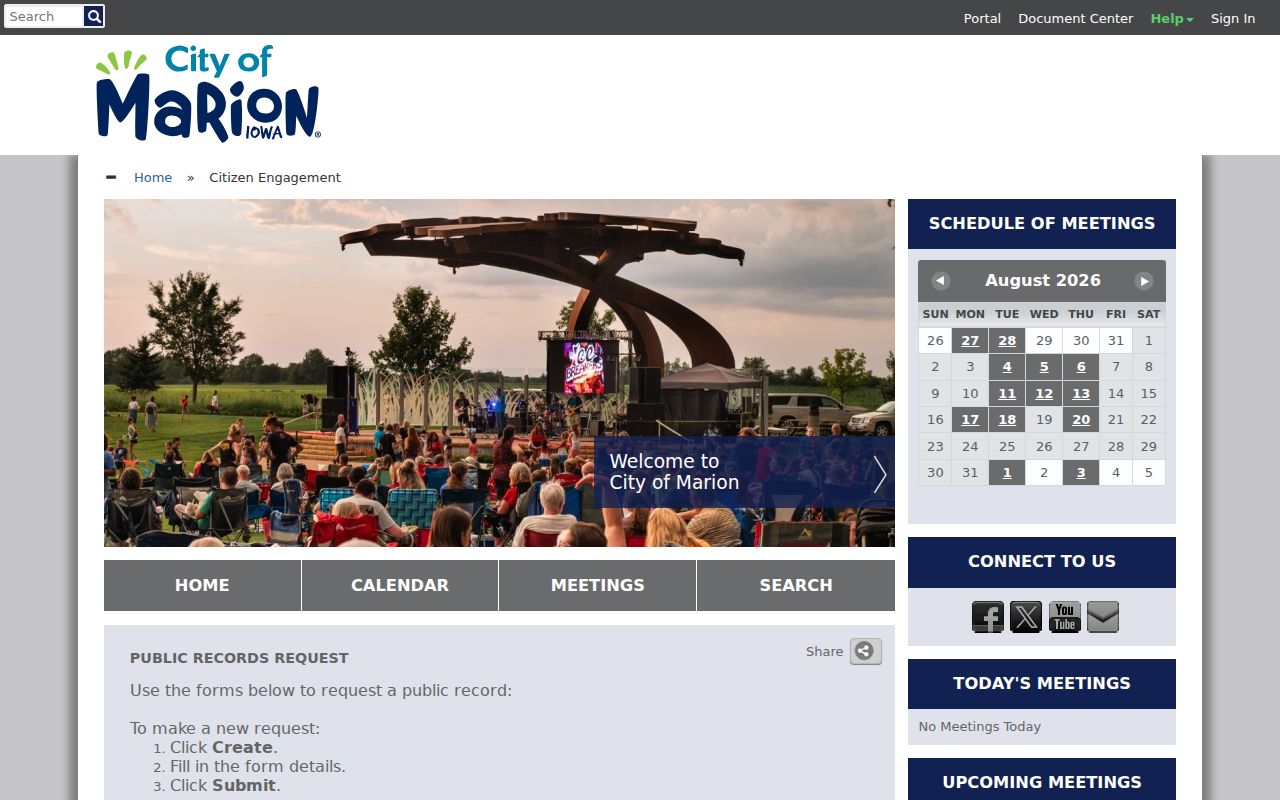
If its form does not render, the City Clerk also accepts a narrow request by email, phone, mail, fax, or in person.
Marion Deeds Name the Parties
The Linn Recorder's land trail includes deeds, mortgages, assignments, releases, liens, and plats. A grantor gives an interest; a grantee receives it. Search AVA or the free statewide Iowa Land Records connection when possible. Save the instrument, book and page, legal description, document type, and filing date. If the online image is absent, send those identifiers to the Recorder. The office also accepts mail, drop-box, and phone work.
Ordinary copies are listed at $1 per page and certified copies at $5. A certified copy bears the custodian's certification; it differs from a screen print. Because the online start year was not found in an official source, older Marion research should move to the recorder counter or the State Historical Society's Linn County land groups rather than assume the record never existed.
The Iowa business entity search is useful only when a deed or city file names a business.
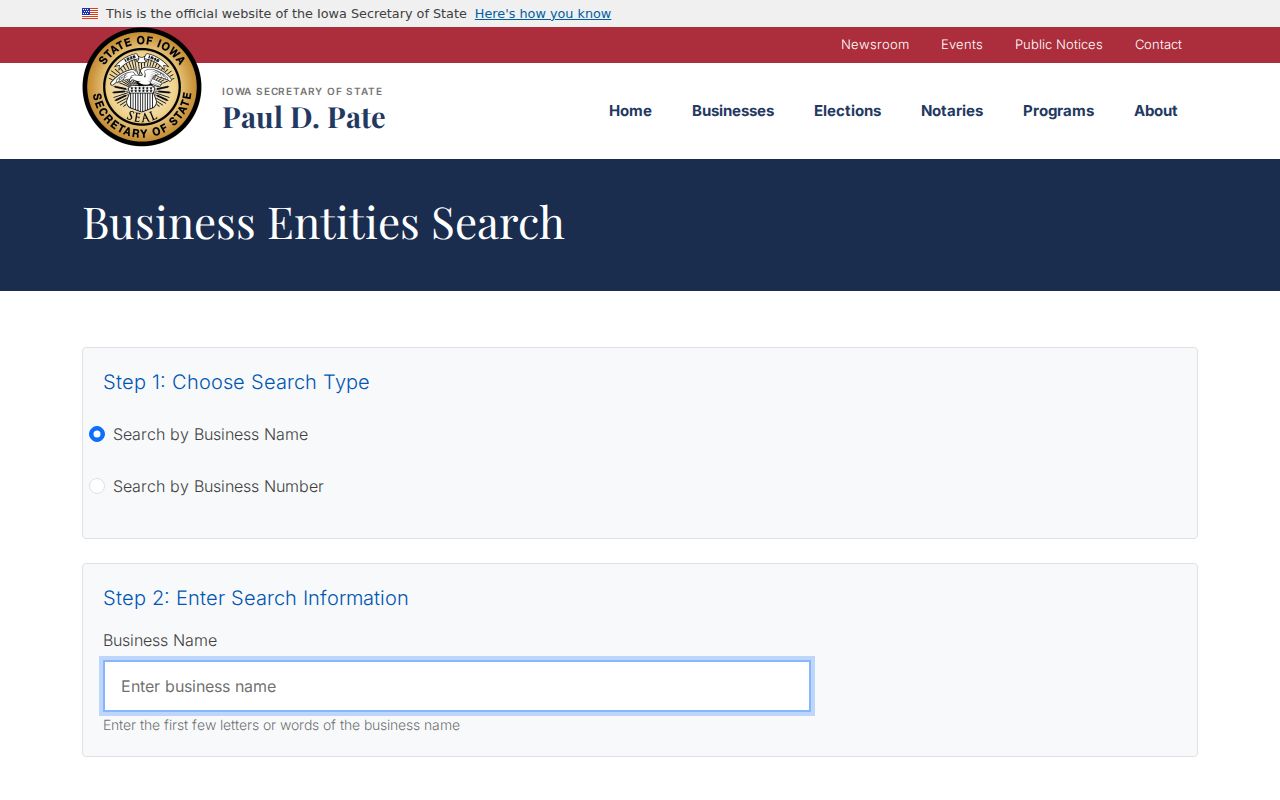
Entity status and prior names can confirm the organization, but its registered address does not prove personal residence.
Request Marion City Records
Marion's City Clerk coordinates requests for municipal files. Useful resident-directory material can appear in council agendas, minutes, permits, plats, rezoning files, licenses, cemetery records, and records tied to a named city project. The city says staff responds within ten days. A request may be submitted through CivicWeb or by letter, email, fax, phone, or in person. Give a record type, date range, department, address, case or permit number, and delivery preference.
The city may charge actual copying, media, postage, staff time after the first thirty minutes, and legal or redaction review. It may estimate the cost and seek a deposit. Building Services has a public permit lookup for 2010 onward by permit type, permit number, and service address. Earlier permit questions go to the department. Planning's zoning map cannot be searched by address or parcel, so staff contact is the correct fallback.
The Iowa Public Information Board's Chapter 22 guidance shows the statewide access framework.
Chapter 22 opens existing public records, but it does not require a custodian to build a new resident list.
Verify Marion Court Names
Iowa Courts Online is a statewide docket index. Search by name, case number, or other fields documented in the official help, then compare county, case type, party role, filing details, and disposition. One surname is not enough. Public cases are ordinarily added quickly, but older trial cases before 1998 may require the Linn County Clerk of Court. Confidential and juvenile matters do not appear.
The Clerk's public office at the courthouse in Cedar Rapids holds the official file for Linn District Court matters. A docket is the event list and case summary; it is not the complete file. Exhibits, service returns, some schedules, and other material may require clerk access or a paid subscription. City parking tickets are not in Iowa Courts Online.
The manifest's Linn County Clerk page identifies the office divisions.
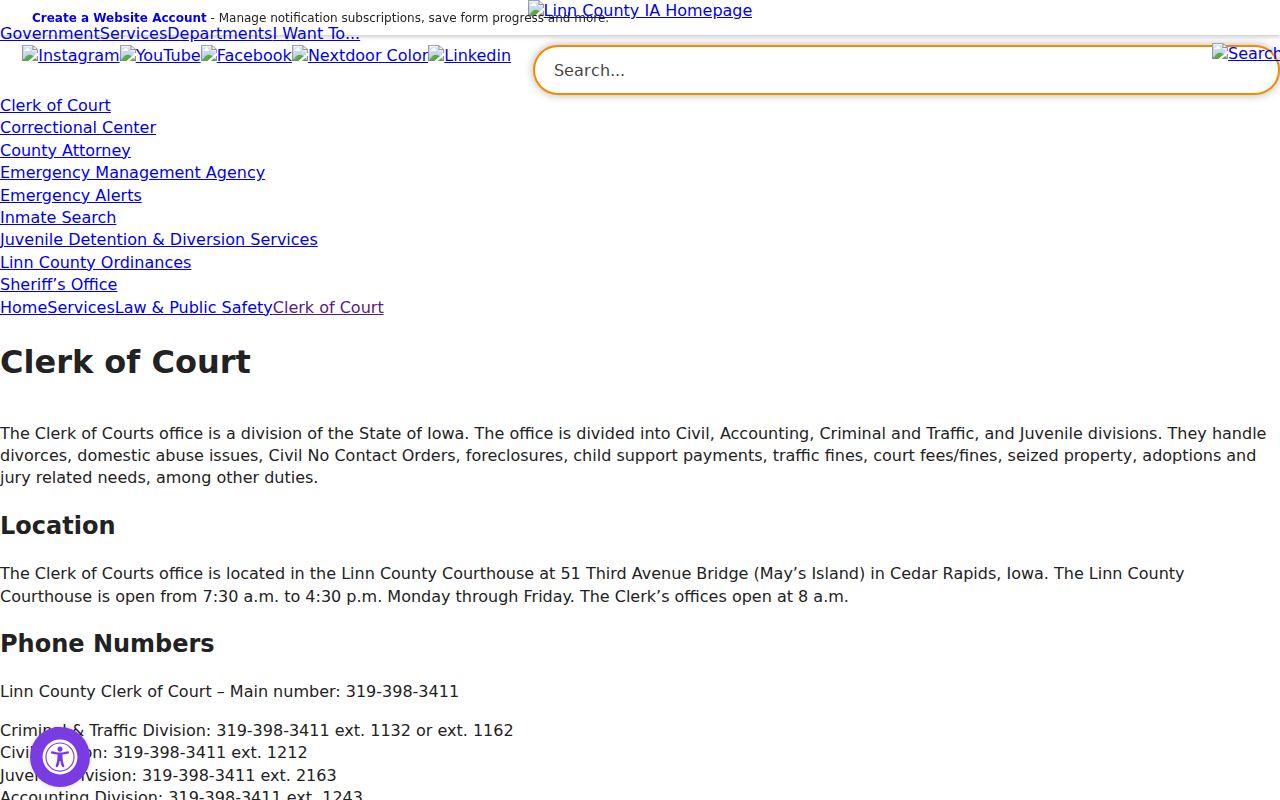
Civil, criminal and traffic, juvenile, and accounting questions should go to the correct clerk division.
Older Marion Residents Directory Runs
Marion's Digital Community History Archive carries city directory titles from 1915 through 2009, with gaps and edition differences that must be kept visible. It also includes telephone-directory runs from 1927 through 1937 and historical newspapers. A 1996 R. L. Polk edition reports 11,595 total listings and 7,446 household listings. Its sections include names, businesses, a street guide, and classified listings. The street guide is a reverse or criss-cross tool: begin with an address and read the listed occupant rather than begin with a surname.
The Marion Public Library provides the digital archive, in-library Ancestry Library Edition, HeritageQuest census material, Gazette access, and the Linn County Obituary Index. The Marion Heritage Center's Pat Klopfenstein Library offers local-history and genealogy help. The complete historical shelf and directory-reading method appear in the Marion city directory collections.
Directory evidence is dated and selective. An entry may show name, spouse, occupation, employer, phone, and address, yet the publisher's abbreviations and scope govern what it means. Pair a directory year with a census, newspaper, deed, obituary, or probate file rather than stretch one listing across a decade.
Marion Archives Survived Disruption
The August 2020 derecho damaged Marion Public Library, and the library history reports that about twenty percent of its collection was lost. That loss explains why a local item may not be on a present shelf. Digital copies, the Heritage Center, the State Historical Society of Iowa, newspaper runs, and county record groups offer parallel routes. A negative library search should prompt a check of those collections, not a claim that no record was created.
Marion's official history supplies useful date anchors. The city was platted in 1839. The railroad arrived on October 13, 1864, and Marion became a division point in 1887. Those dates can narrow directory, newspaper, city-minute, and occupational searches for a family connected to rail work or the businesses around it. Historical color should guide a search, while a dated primary record confirms the person.
Marion's population reached 41,535 in the 2020 Census, with a 2025 estimate of 42,732. Growth increases same-name problems and makes precise parcel, date, and record-role matching more important.
Oak Shade Extends Marion Trails
Oak Shade Cemetery is a city-owned record source at 789 2nd Avenue. Marion publishes a burial list current as of January 14, 2025, and permanent interment records are open under Iowa Code section 523I.311. Cemetery deeds, lot-owner information, burial entries, headstone photographs, obituaries, and probate can extend a family trail. Each item proves something different. A burial place does not prove the person's home at death, and a lot owner may be a relative or purchaser.
The Linn County Obituary Index covers roughly the 1930s through the 1980s as a finding aid held by the Linn County Genealogical Society Library. It is not a certified death index. For a certified record, authorized applicants use Linn County or Iowa HHS under the applicable eligibility and confidentiality rules. State historical access opens on a different schedule for older vital records.
Protect Private Marion Addresses
Iowa Safe at Home provides a substitute address, confidential voter registration, and mail forwarding for qualifying survivors. It does not erase real-estate records, which are a separate public system. Vital records, juvenile or sealed court matters, driver records, and protected law-enforcement details have their own limits. Stop the search when protected status appears. Do not use another public source to reconstruct an address that a confidentiality program is designed to hide.
The Safe at Home program explains its official protections and application route.
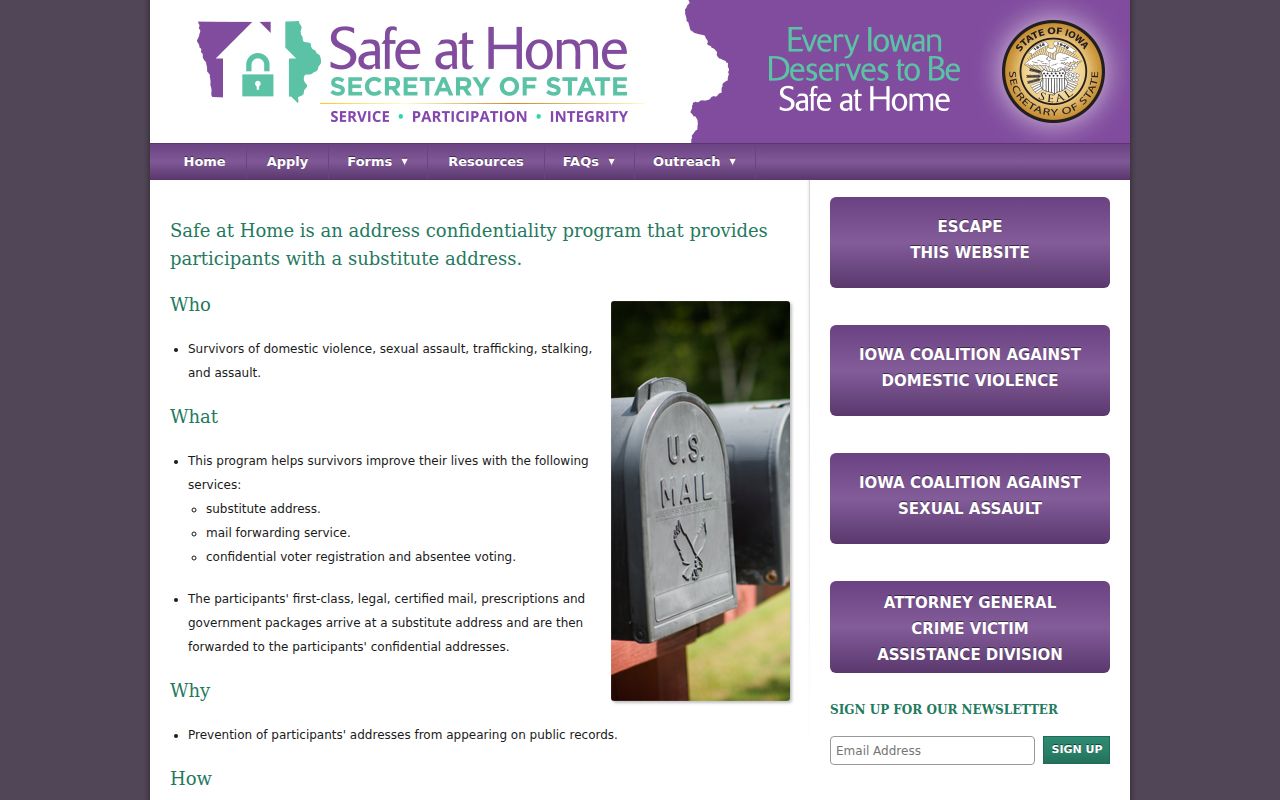
The program is the right contact for eligibility and protected-mail questions; local directory searches should respect the substitute address.
Use records lawfully. Marion public records support family history, civic research, reconnection, scam checks, and personal safety. Never use them to stalk, harass, threaten, or harm anyone.
Check Marion Deed Alerts
Linn County's free Property Fraud Alert watches a subscribed name in Recorder filings. An email may reflect a purchase, sale, refinance, same-name filing, loan, or lien. It is an alert service, not a block on recording and not a finding that fraud occurred. If a notice looks wrong, search AVA for the newest instrument, compare the legal description, and call the Recorder through the county's published contact.
The current AVA references follow Linn County's September 3, 2024 Fidlar migration. Older bookmarks or portal names may therefore fail. Preserve the GPN, instrument, book and page, party spelling, and date before contacting staff. Recorder staff can explain the general document type and legal description, but they cannot decide legal validity or give legal advice. Ignore urgent payment demands until the county confirms the filing.